Why Does Food Texture Matter So Much? The Science Behind Crispy, Creamy and Chewy Foods
Why does one food feel satisfying when it is crispy, while another feels comforting because it is creamy or soft?
Texture is one of the first things we notice when we eat, even before we consciously think about flavour.
The crunch of a fresh potato chip, the crisp crust of bread, the creaminess of ice cream and the stretch of melted cheese all create very different eating experiences.
As a chef, I think texture is one of the most underestimated parts of good food. A dish can have excellent ingredients and strong seasoning, but if the texture is wrong, the entire experience can feel disappointing.
Food texture is not random. It comes from the structure of ingredients, water, fat, proteins, starches, temperature and the way food is processed and cooked.
That is why chefs can deliberately create contrast on a plate: something crisp beside something creamy, something tender beside something crunchy, or something light beside something dense.
So why does food texture matter so much, and what is actually happening inside the food when something becomes crispy, creamy, chewy or crunchy?
Let’s look at the food science behind the sensations we experience every day.
Why Texture Changes the Way Food Tastes
Taste and texture are closely connected, even though they are technically different sensations.
When you eat a food, your mouth is sensing much more than sweet, salty, sour, bitter or umami. Your teeth, tongue and palate are also detecting pressure, resistance, smoothness, crunch, thickness and temperature.
That information changes how the brain experiences the food.
A crispy fried potato creates a completely different sensation from a soft boiled potato, even though both may contain the same basic ingredient. A thick, creamy soup feels different from a thin broth. A freshly baked piece of bread feels different from bread that has lost its moisture.
This is why texture can influence whether a food feels fresh, rich, light, indulgent or satisfying.
Chefs use this deliberately.
A creamy sauce may be paired with something crispy. A soft dessert may include a crunchy element. A tender piece of meat may be served with a crisp vegetable or toasted garnish.
The contrast creates interest.
Texture is therefore not just something we notice while eating. It is one of the tools chefs use to design the entire eating experience.
What Makes Food Crispy?
Crispy food is one of the clearest examples of food science in action.
When you fry or bake food, heat drives water away from the surface. As the surface becomes drier, it can develop a firm structure that breaks when you bite into it.
The amount of moisture is critical.
If the surface remains too wet, you get softness instead of crunch. If the food loses too much moisture or is cooked for too long, the texture can become hard rather than pleasantly crisp.
The ingredients also matter. Starches, proteins and fats behave differently when heated, and the structure created during cooking determines how the food feels when you bite it.
This is why good fried food has a delicate balance: a crisp exterior with a moist and tender interior.
Temperature matters too. If frying oil is not hot enough, food can absorb more oil and develop a heavy, soft surface. If the temperature is controlled properly, the surface can develop the crisp texture chefs are looking for while the inside cooks correctly.
Crispiness is therefore not simply about frying. It is about controlling moisture, heat, structure and time.
Once you understand that, you can start predicting why some foods stay crispy and others quickly become soft.
Why Is Creaminess So Satisfying?
Creaminess is almost the opposite of crispiness. Instead of breaking sharply when you bite it, a creamy food feels smooth, rich and easy to spread across the mouth.
Fat and water play a major role in creating this sensation. Ingredients such as cream, butter, cheese and some emulsified sauces can create a smooth structure that feels rich and luxurious.
But creaminess is not simply about adding more fat.
The size of particles, the amount of water, temperature and the way ingredients are mixed can all change how a food feels.
Think about a well-made soup. Two soups can contain similar ingredients, but one may feel silky while the other feels grainy or watery. The difference can come from how finely the ingredients are processed and how the liquid and fat are combined.
Temperature also changes our perception. Ice cream, for example, contains fat, water and air in a carefully structured system. Its texture changes as it warms, which is why slightly softened ice cream can feel creamier than ice cream straight from a very cold freezer.
Good creaminess is a balance of structure, moisture, fat, temperature and processing.
That balance is what gives many foods their smooth and satisfying mouthfeel.
Why Is Chewy Food So Different? Chewiness comes from a food structure that resists your bite instead of breaking immediately.
Proteins and starches are especially important. Their structure can change significantly when they are mixed, heated or hydrated.
Bread is a simple example. When flour is mixed with water and worked, gluten proteins form a network. That network helps give dough elasticity and structure. More developed gluten can contribute to a chewier texture, while different flour, hydration and preparation methods can produce very different results.
Pasta shows another side of the same idea. Properly cooked pasta has enough structure to offer resistance when you bite it. Cook it for too long and that structure softens, creating a noticeably different mouthfeel.
Chewiness can also be desirable in foods such as certain breads, noodles, pizza crusts and confectionery.
The key is controlled resistance.
Too little structure can make food feel weak or mushy. Too much can make it feel tough or difficult to eat.
For chefs, the goal is not always to make food as soft as possible. Sometimes the best texture is the one that gives you just the right amount of resistance.
Why Does Food Become Crunchy?
Crunch and crispness are related, but they are not exactly the same experience.
Crisp foods usually break easily with a light bite, while crunchy foods can require more pressure and produce a stronger sound as they fracture.
The sound is actually part of the experience.
When you bite into a crunchy food, tiny structures inside the food break rapidly. These fractures create vibrations that travel through the food and into your mouth and ears.
Moisture has a major influence on this texture. A dry, rigid structure tends to fracture more easily, while moisture can soften the structure and reduce the characteristic crunch.
This is why cereal can lose its crunch when left in milk for too long and why fried snacks can become soft when exposed to humidity.
Packaging also matters for commercial foods. Keeping moisture away from a crispy or crunchy product can help preserve its texture during storage and transportation.
For chefs and food manufacturers, maintaining crunch is therefore a combination of cooking, ingredient structure, moisture control and storage.
Sometimes the sound of food is part of what makes the food feel satisfying.
Why Does Moisture Change Food Texture?
Water is one of the biggest factors controlling food texture. Water plays an important role in many of the physical changes that happen during cooking and food preparation.
It can make food soft, tender and juicy, but it can also destroy crispness when it moves into a dry surface.
Think about a freshly fried samosa. The outer pastry is crisp because its surface has relatively little moisture. Leave it exposed to steam or a humid environment, and moisture gradually moves into the crust. The once crisp surface becomes softer.
The same principle explains why biscuits lose their snap, why fried snacks become soggy and why cereal becomes soft in milk.
Moisture can also move in the opposite direction. During cooking, water can leave food through evaporation. This can concentrate flavours and change the structure of the food.
Food texture is often a battle between water staying where it belongs and water moving where it should not.
Chefs therefore control moisture carefully through cooking temperature, cooking time, resting, cooling, storage and even the way food is plated.
Understanding moisture movement is one of the simplest ways to understand why a food stays crisp, becomes soft or changes texture over time.
How Does Temperature Change Food Texture?
differently at different temperatures. When warm, it becomes fluid. When cooled, it becomes firm again because the fat structure changes.
Cooking temperature is equally important. Proteins in meat change as they are heated, while starches absorb water and swell during cooking. These changes can transform ingredients from raw and firm into tender, soft or even gelatinous textures.
This is why temperature control is such an important part of professional cooking.
The same ingredient can deliver a completely different eating experience simply because its temperature and internal structure have changed.
For chefs, temperature is therefore not just about cooking food safely. It is also one of the tools used to create the texture we want.
Why Does Texture Matter to Chefs?
In a professional kitchen, texture is something chefs think about from the beginning of recipe development.
A dish should not only taste good. It should also feel right from the first bite to the last.
This is where texture contrast becomes important.
Imagine a bowl of creamy soup with a crisp garnish, a soft dessert with toasted nuts, or tender chicken served with a crunchy salad. Each component creates a different sensation, and the contrast keeps the eating experience interesting.
Texture can also communicate quality.
A crisp fried coating can suggest freshness. Properly cooked pasta can show that it has been prepared with care. A smooth sauce can make a dish feel refined, while an unexpectedly watery or mushy texture can make the same dish feel poorly prepared.
This is particularly important in restaurants because customers experience food with all their senses.
Great cooking is not only about flavour. It is about creating the right combination of flavour, aroma, temperature and texture.
When chefs understand the science behind texture, they can make better decisions about ingredients, cooking methods and presentation rather than relying only on trial and error.
Can Food Texture Change After Cooking?
Yes. Food texture can continue changing even after cooking is finished.
One major reason is moisture movement. Steam and water can slowly move from one part of a food to another, changing the balance between crisp and soft areas.
A freshly baked bread crust may start crisp but soften as moisture from the interior moves toward the crust. Fried foods can behave in a similar way, especially when they are covered while still hot.
Starches can also change during cooling and storage. This is one reason some cooked foods become firmer or develop a different texture after they have been refrigerated.
Sauces can thicken as they cool, while fats can solidify and make a dish feel heavier or firmer.
This is why professional chefs think about when a dish will actually be eaten, not just how it looks when it leaves the cooking station.
A texture that is perfect immediately after cooking may not be the same 10 or 20 minutes later.
Understanding these changes helps chefs design food that still tastes and feels good when it reaches the customer.
How Do Chefs Create Texture Contrast?
One of the easiest ways chefs make a dish more interesting is by combining different textures.
Instead of making every component soft, creamy or crunchy, chefs can create contrast between them.
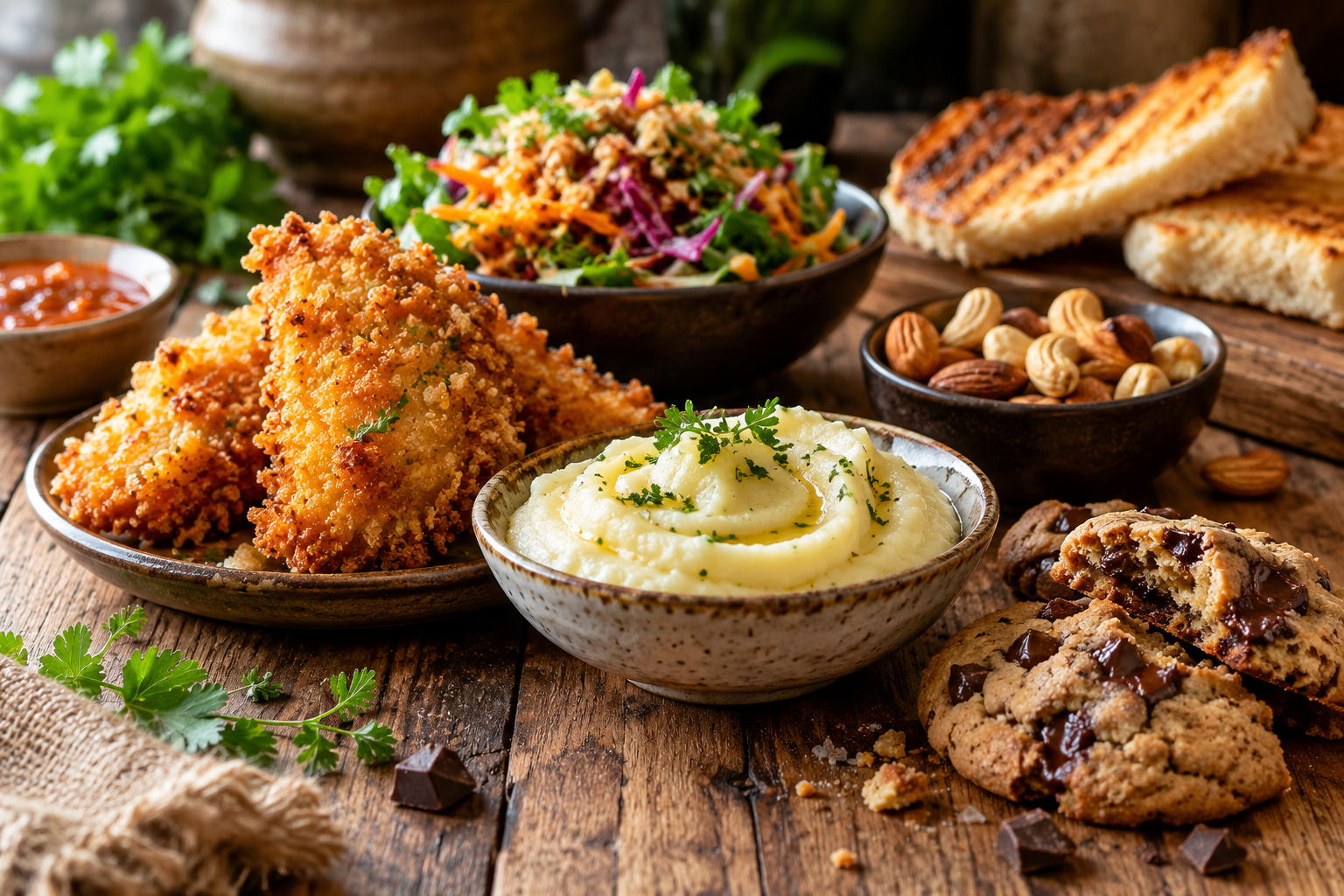
A creamy soup can be finished with crispy bread. A tender piece of chicken can be paired with a crunchy salad. A smooth dessert can be served with toasted nuts or a crisp biscuit.
This contrast gives the mouth something different to experience with every bite.
Texture contrast can also make a dish feel more balanced. A rich and creamy component may feel lighter when combined with something fresh and crisp. A soft food can become more interesting when there is a small amount of crunch.
The goal is not to add as many textures as possible. The goal is to choose textures that work together.
This is one reason professional cooking is more than simply following a recipe. Chefs think about how ingredients interact, how they feel in the mouth and how the complete dish will be experienced.
Once you start paying attention to texture, you will notice that some of your favourite dishes are built around this simple principle.
What Happens When Food Texture Goes Wrong?
Even a well-seasoned dish can disappoint if its texture is wrong.
A fried snack can taste delicious but feel greasy and soggy. Pasta can have a good sauce but become unpleasant if it is overcooked. A soup can have excellent flavour but feel watery when a thicker, smoother texture is expected.
These problems often come from small changes in moisture, temperature, cooking time, ingredient ratios or processing.
The interesting part is that texture problems are often predictable.
If a fried product becomes soggy, moisture may be moving into the crisp coating. If a sauce feels grainy, ingredients may not have formed the smooth structure expected. If meat becomes tough, proteins may have changed too much during cooking.
This is why understanding food science can make troubleshooting much easier.
Instead of simply asking, “What went wrong? ”, a chef can ask:
“What happened to the structure of the food?”
That question often leads much closer to the real solution.
Why Is Texture Part of the Eating Experience?
Food texture influences how we judge a dish from the very first bite.
We naturally form expectations from what we see, hear and feel. A crisp sound can make a food seem freshly cooked. A smooth texture can make a dessert feel rich and indulgent. A firm bite can make pasta or vegetables feel properly cooked.
Texture can even affect how quickly we eat and how long we chew. Foods with more resistance usually require more chewing, while very soft foods can be eaten much more quickly.
This makes texture important not only for chefs but also for food manufacturers and restaurant businesses. A product that tastes good but loses its intended texture during storage, delivery or service may not give customers the experience they expected.
Good texture is therefore part of product quality, not simply decoration.
When flavour, aroma, temperature and texture work together, food becomes much more satisfying.
Once you understand the science behind texture, you begin to see cooking differently. Crispy, creamy, chewy and crunchy are not just descriptions. They are results of structure, moisture, temperature and technique.
Chef RBS Takeaway
Food texture is not accidental. It is created by the way ingredients, water, heat, fat, proteins and starches interact during preparation and cooking.
Crispy foods depend heavily on moisture and surface structure. Creamy foods depend on smoothness, fat, water and how ingredients are combined. Chewy foods rely on structure and controlled resistance, while crunchy foods depend on rigid structures that fracture when you bite them.
As chefs, understanding these principles gives us much more control over the final dish.
Instead of simply following a recipe, we can understand why a particular technique works and what to change when the result is not right.
The next time you eat something crispy, creamy, chewy or crunchy, don’t just taste it. Think about the science creating that texture.
That is where food becomes much more interesting.
Frequently Asked Questions
Why does food texture matter?
Food texture affects how we experience a dish. It can influence freshness, richness, tenderness, crispness and overall satisfaction.
What makes food crispy?
Crispiness develops when heat removes moisture from the surface and creates a structure that can fracture when you bite it. Cooking temperature, time, ingredients and moisture all affect the result.
Why do fried foods become soggy?
Moisture can move into the crisp outer surface after cooking. Steam, humidity, covering hot food and poor storage can all reduce crispness.
What makes food creamy?
Creaminess depends on factors such as fat, water, particle size, temperature and how ingredients are mixed or processed. These factors create a smooth mouthfeel.
Why does pasta become chewy?
Pasta retains some internal structure when properly cooked. The proteins and starches in the pasta interact with water and heat, creating the resistance we associate with a good bite.
Can temperature change food texture?
Yes. Heating and cooling can change fats, proteins, starches and moisture movement, which can make food softer, firmer, thicker or more fluid.
How do chefs create different textures in one dish?
Chefs combine contrasting elements such as crispy, creamy, tender, chewy and fresh components. The contrast makes each bite more interesting.