Why Does Fermentation Change the Taste of Food? The Science Behind Fermented Foods
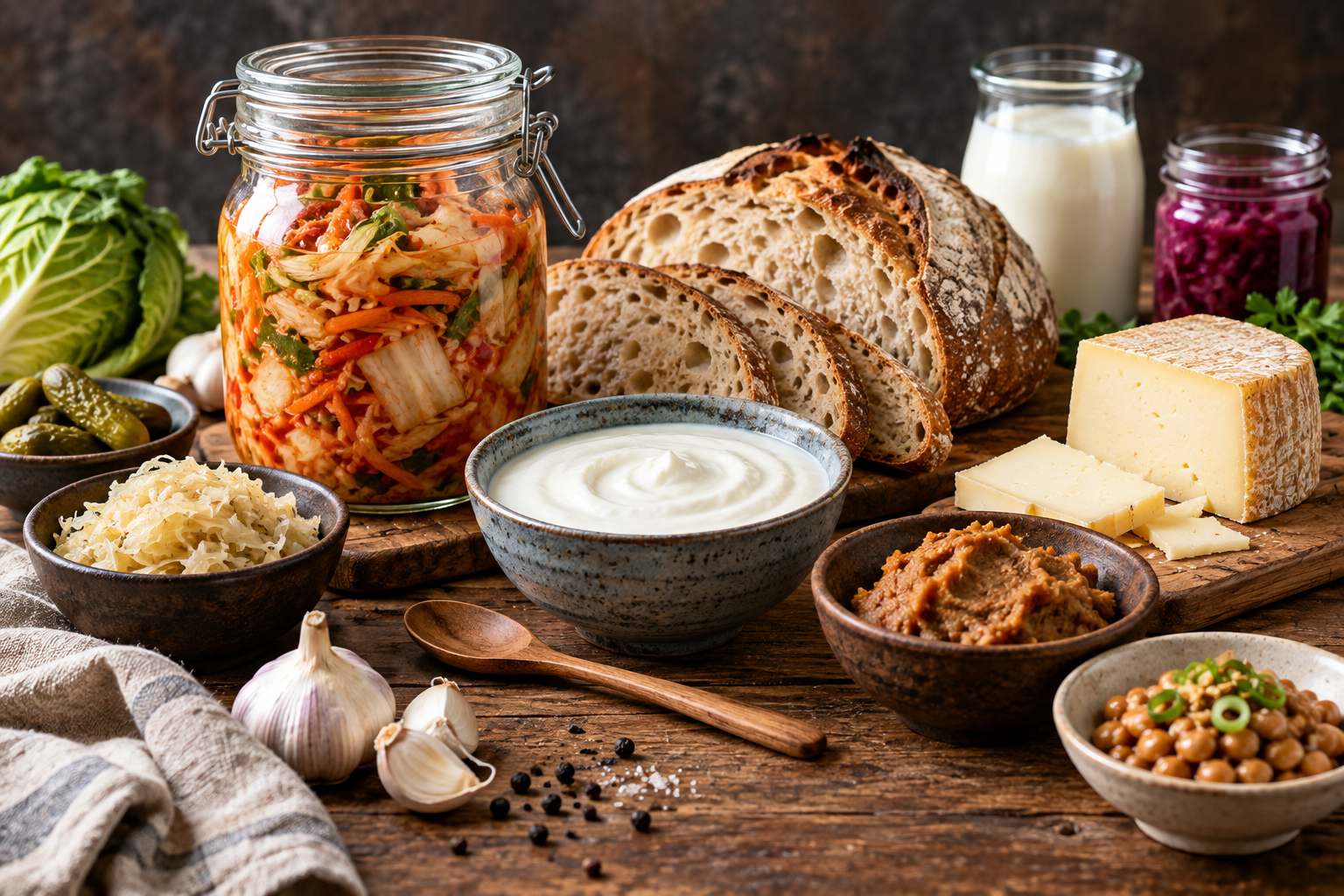
Have you ever wondered why cabbage can become tangy sauerkraut, milk can become yogurt or cheese, and soybeans can develop completely different flavors after fermentation?
The original ingredient may still be recognizable, but something has changed.
The flavor becomes deeper. Acidity can increase. New aromas appear. Texture can change. In some foods, fermentation creates savory or umami notes that were not noticeable in the original ingredient.
The reason is surprisingly simple:
Microorganisms are changing the chemistry of the food.
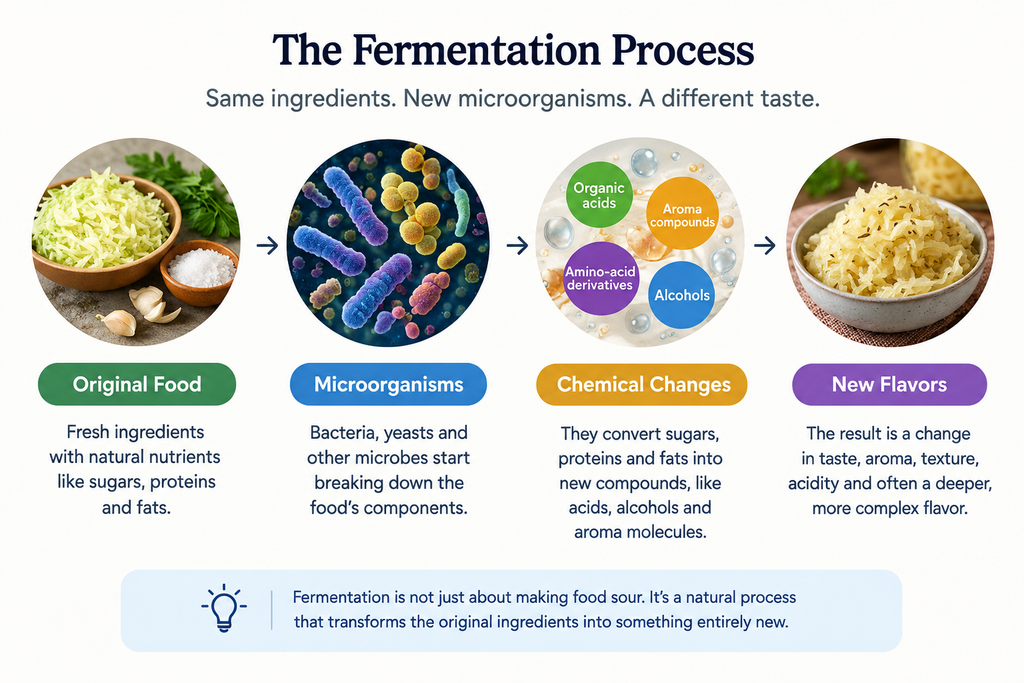
During fermentation, bacteria, yeasts and other microorganisms use nutrients in the food as part of their metabolism. As they grow and interact, they transform sugars, proteins, fats and other compounds into new substances, including organic acids, alcohols, amino-acid derivatives and aroma compounds. These changes can dramatically alter how the food tastes and smells.
But fermentation is not simply a way to make food sour.
Different microorganisms and different fermentation conditions can create very different results. Temperature, salt, acidity, time, ingredients and the microbial community all influence the final flavor. Recent food science research is increasingly examining these interactions because they help explain why fermented foods develop such complex sensory profiles.
That leads to a fascinating question:
How can something as simple as letting microorganisms work on food create such a dramatic change in flavor?
What Actually Happens During Fermentation?
Fermentation begins when microorganisms start using the nutrients naturally present in food.
The microorganisms involved can include bacteria, yeasts and certain fungi. Different foods support different microorganisms, which is one reason fermentation can produce such a wide range of flavors and textures.
The simplest way to understand it is to think of fermentation as a controlled biological transformation.
Microorganisms consume available nutrients and produce new compounds as part of their metabolism. Depending on the type of fermentation, these can include organic acids, alcohols, gases and many smaller compounds that influence aroma and flavor.
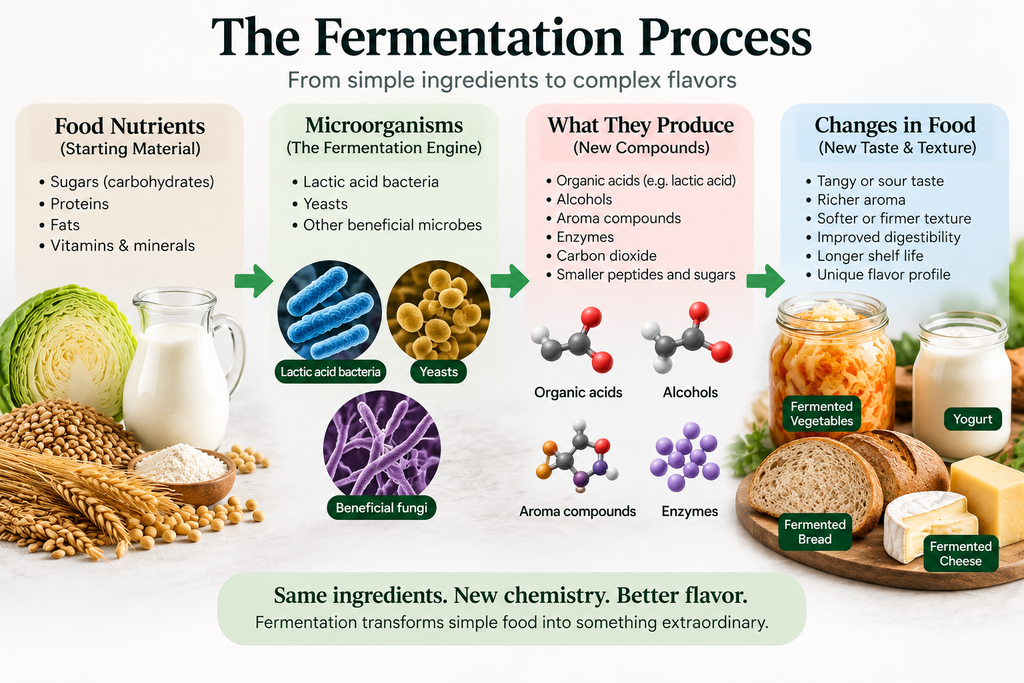
For example, lactic acid bacteria can convert certain sugars into lactic acid. As acidity increases, the food develops a characteristic tangy or sour taste.
Yeasts can convert sugars into alcohol and carbon dioxide, which is important in products such as bread and many fermented beverages.
But the process does much more than create acidity or alcohol.
Fermentation can also change how proteins, carbohydrates and other food components behave. Enzymes produced by microorganisms can break larger molecules into smaller ones, creating compounds that contribute to aroma, taste and texture.
This is why two foods made from similar basic ingredients can taste completely different after fermentation.
The important point
Fermentation does not simply add a flavor to food. It creates new chemistry inside the food.
That chemistry is what gives fermented foods their distinctive character.
Why Do Different Fermented Foods Taste So Different?
Not all fermentation produces the same flavor.
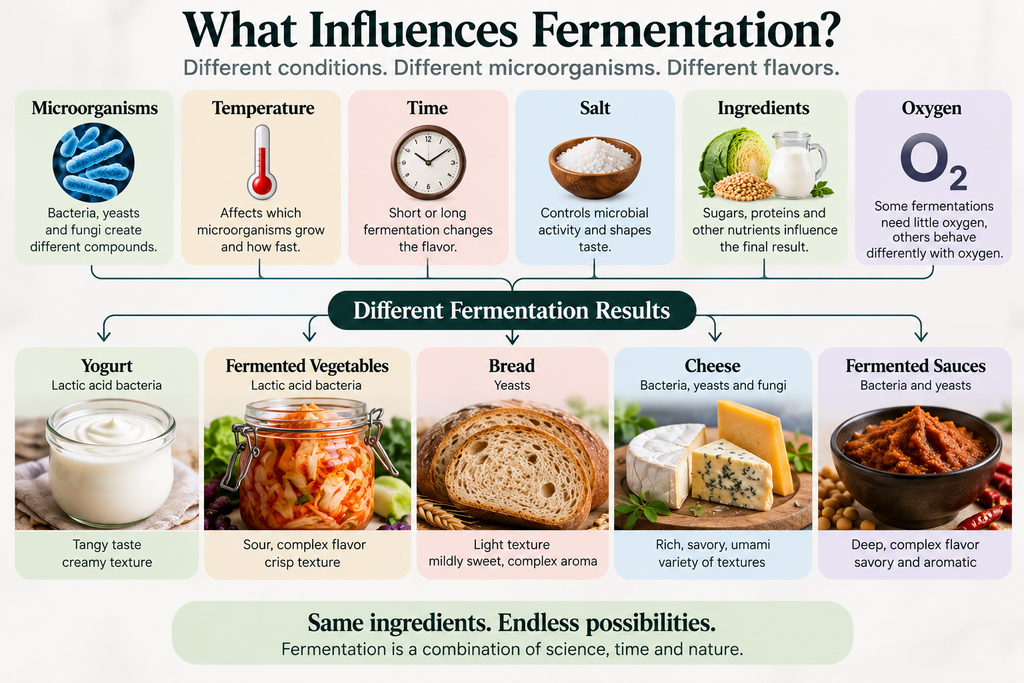
That is because different microorganisms, ingredients and fermentation conditions create different chemical changes.
Yogurt develops its familiar tang largely because lactic acid bacteria convert available sugars into lactic acid. Bread fermentation involves yeast producing carbon dioxide and alcohol, while the fermentation of vegetables can create acids and aromatic compounds that give them a sharp, complex character.
Even the same ingredient can produce different results depending on how it is fermented.
The main factors include:
Microorganisms
Different bacteria, yeasts and fungi produce different metabolic compounds.
Temperature
Temperature affects which microorganisms grow and how quickly they work.
Time
A short fermentation and a longer fermentation can produce very different levels of acidity, aroma and flavor complexity.
Salt
In many vegetable fermentations, salt influences microbial activity and helps shape the final flavor.
Available nutrients
The sugars, proteins and other compounds present in the starting food determine what microorganisms have available to transform.
Oxygen
Some fermentation processes work best with limited oxygen, while others involve microorganisms that behave differently depending on oxygen availability.
This is why fermentation is not simply a single cooking technique.
It is more like a microbial ecosystem that changes over time.
A chef or food producer who understands these variables can influence the final result rather than simply waiting for fermentation to happen.
And that is where fermentation becomes especially interesting from a food science perspective:
The final flavor is partly determined before you even taste the finished food.
Why Does Fermentation Make Food Taste More Complex?
One of the most fascinating things about fermentation is that the final flavor often contains many layers instead of one dominant taste.
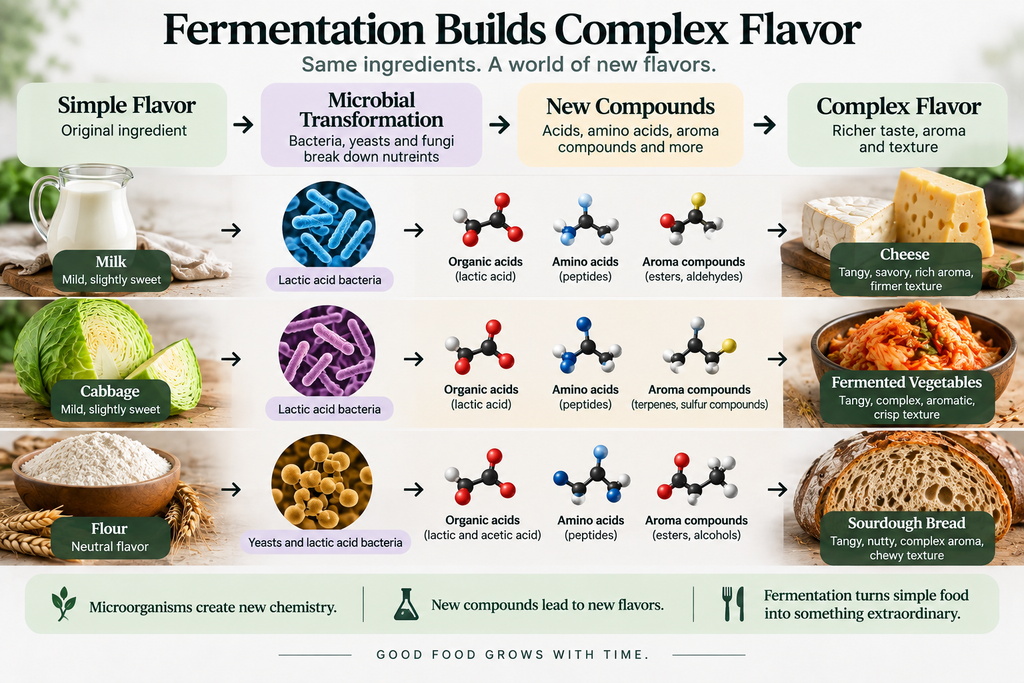
A fresh ingredient may have a relatively simple flavor profile. After fermentation, microorganisms can transform carbohydrates, proteins and fats into a much wider range of compounds. These include organic acids, alcohols, esters, aldehydes, peptides and other aroma molecules.
This is why fermented foods can taste:
- Sour or tangy from organic acids
- Savory or umami-rich from amino acids and peptides
- Fruity or floral from certain volatile aroma compounds
- Earthy or deeply aromatic from microbial and enzymatic activity
- More rounded and complex because several taste and aroma compounds interact
There is another important detail: flavor is not just taste on the tongue.
What we experience as flavor comes from the combination of taste and smell. Research on fermented foods shows that microorganisms can influence both taste-active compounds and volatile aroma compounds, which then interact with our sensory receptors.
This explains why fermentation can make a food seem dramatically different even when its basic ingredients remain recognizable.
Think about the difference between fresh milk and cheese.
The starting ingredient is still milk, but fermentation and subsequent biochemical changes can produce acidity, savory compounds, aromas and major changes in texture. The result is not simply “sour milk.” It is a completely different sensory experience.
That is the real power of fermentation.
Microorganisms are not just preserving food. They are helping build its flavor.
Why Does Fermentation Create Sour, Savory and Aromatic Flavors?
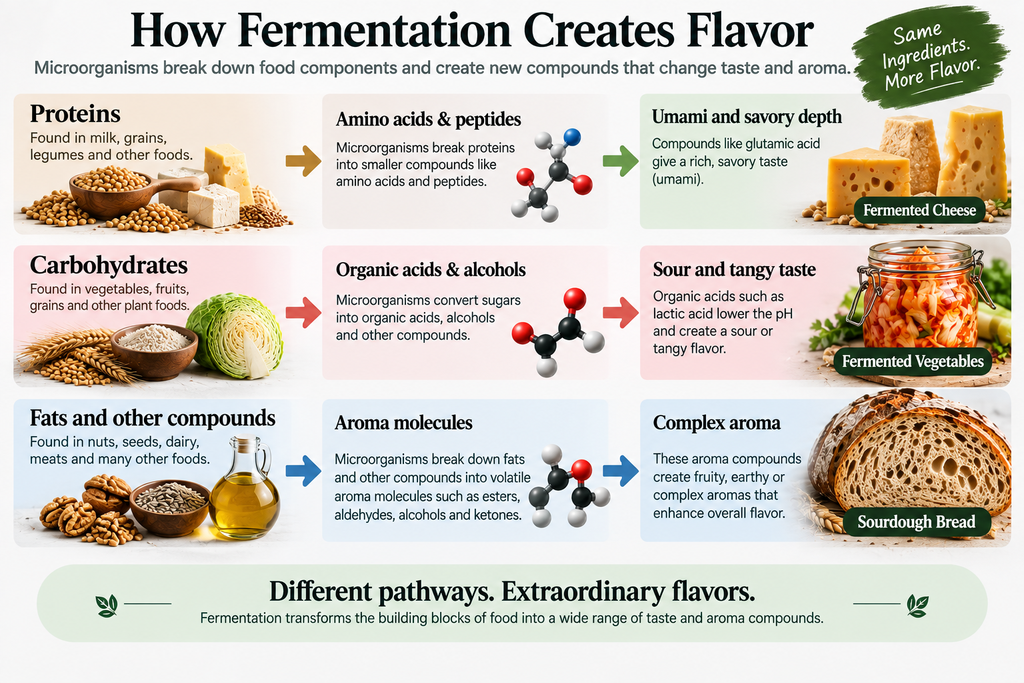
The most noticeable change in many fermented foods is the development of new taste and aroma compounds.
Microorganisms do this by breaking down the nutrients available in the food and redirecting them through different metabolic pathways. Proteins can be broken into peptides and amino acids, carbohydrates can be converted into acids and alcohols, and fats can be transformed into fatty acids and other compounds that contribute to aroma.
That is why fermentation can create several sensory experiences at the same time.
Sourness
Organic acids are one of the easiest changes to notice.
When microorganisms produce acids such as lactic acid, the pH of the food can decrease and the flavor becomes more tart or sour. This is an important part of the character of many fermented vegetables and cultured dairy foods.
Umami and savory depth
Fermentation can also release free amino acids and peptides from proteins.
Some of these compounds contribute to savory and umami sensations. This is particularly important in foods such as aged cheese, fermented soy products and other protein-rich fermented foods.
Aroma
Then comes the part we often notice before the food even reaches the tongue.
Fermentation can generate volatile compounds such as esters, aldehydes, alcohols, ketones and other aromatic molecules. These compounds interact with our sense of smell and contribute greatly to what we experience as flavor.
This is why fermented food can smell completely different from the original ingredient.
A cabbage may become sharper and more aromatic after fermentation. Milk can develop the characteristic aroma of cheese. Flour can develop the complex aroma associated with sourdough.
The important lesson for chefs is that fermentation builds flavor rather than simply adding flavor.
And the final result depends on the particular microorganisms, ingredients and conditions involved. Scientists studying fermented foods have found that changes in microbial communities can strongly influence which flavor compounds accumulate during fermentation.
Fermentation is therefore a form of natural flavor development.
Why Does Fermentation Change Texture as Well as Flavor?
Fermentation does not only change what you taste. It can also change what you feel when you eat the food.
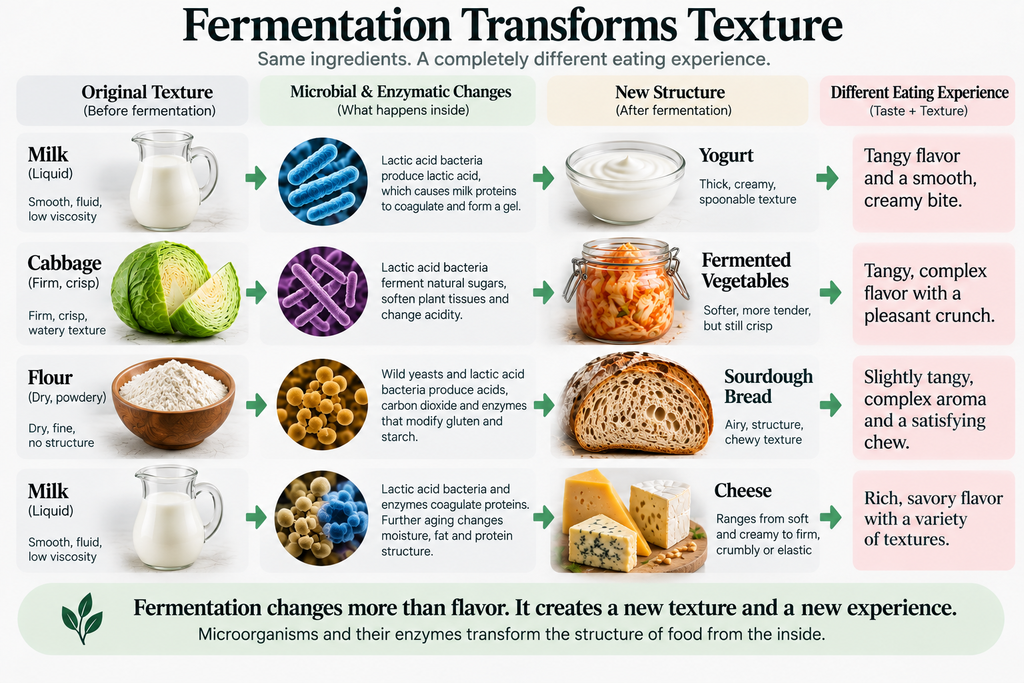
This happens because microorganisms and their enzymes can break down or modify components of the original food, including carbohydrates, proteins and fats. The resulting changes can affect how water is held, how firm a food becomes and how easily its structure breaks apart.
Consider a few familiar examples.
Milk → Yogurt
Fermentation increases acidity and causes milk proteins to reorganize into a gel-like structure. The result is thicker and more spoonable than the original milk.
Cabbage → Fermented Vegetables
Fermentation changes acidity and the structure of plant tissues, producing a characteristic combination of tenderness and remaining crunch.
Flour → Sourdough
Fermentation changes the dough through microbial activity and acid production. This contributes to the characteristic structure, chew and aroma of fermented bread.
Milk → Cheese
Fermentation is part of a much larger transformation involving acidity, enzymes, moisture loss and aging. Over time, the texture can move from soft and creamy to firm, crumbly or elastic depending on the process.
This is one reason fermentation is so valuable in food development.
A single ingredient can become a completely different eating experience without being replaced by another ingredient.
There is also an important relationship between texture and flavor.
Aroma compounds need to be released from the food matrix before they can reach the nose. The structure of a food can therefore influence how quickly or strongly certain flavors and aromas are perceived. Recent research on fermented foods is increasingly examining these interactions rather than treating taste, aroma and texture as completely separate systems.
For a chef, this is particularly useful.
When developing a fermented product, you are not only asking:
“What will it taste like?”
You should also ask:
“What will it feel like?”
Because the best fermented foods create a relationship between acidity, aroma, flavor and texture.
Does Fermentation Make Food Easier to Digest?
One reason fermented foods have remained part of traditional food cultures for generations is that fermentation can change the way some food components are broken down.
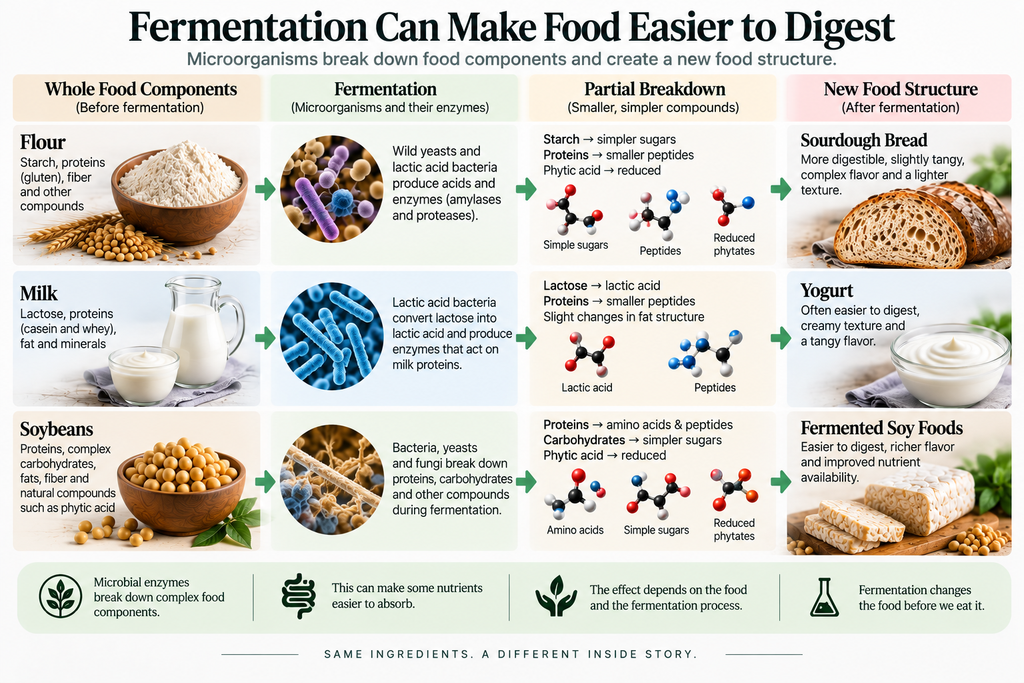
During fermentation, microorganisms and their enzymes can partially break down carbohydrates, proteins and other compounds. This can alter the structure of the food before we eat it.
For example, fermentation can reduce some carbohydrates that certain microorganisms can use as an energy source. In other foods, microbial enzymes can begin breaking down proteins into smaller peptides and amino acids.
This does not mean every fermented food is automatically easier to digest for everyone.
The effect depends on:
- The original ingredient
- The microorganisms involved
- Fermentation time
- Temperature
- Processing method
- How the food is prepared and consumed
Sourdough is a good example.
During sourdough fermentation, microorganisms interact with flour and produce acids and other compounds while changing the dough’s carbohydrate and protein environment. The result is a bread with a very different flavor, aroma and structure from ordinary unfermented dough.
Fermentation can also affect compounds that naturally occur in some plant foods. In certain situations, microbial activity can reduce or transform compounds that interfere with the absorption of some nutrients.
But this is where food science matters.
“Fermented” does not automatically mean “healthier” or “easier to digest.”
The nutritional and digestive effects depend on the particular food and the fermentation process.
For chefs and food developers, the more useful way to think about fermentation is this:
Fermentation changes the food before we eat it.
That change can influence flavor, texture, aroma, nutrient availability and how the food behaves during further cooking or processing.
Can Fermentation Preserve Food?
Before refrigeration, fermentation was one of the important ways people extended the useful life of food.
The science behind this is fascinating.
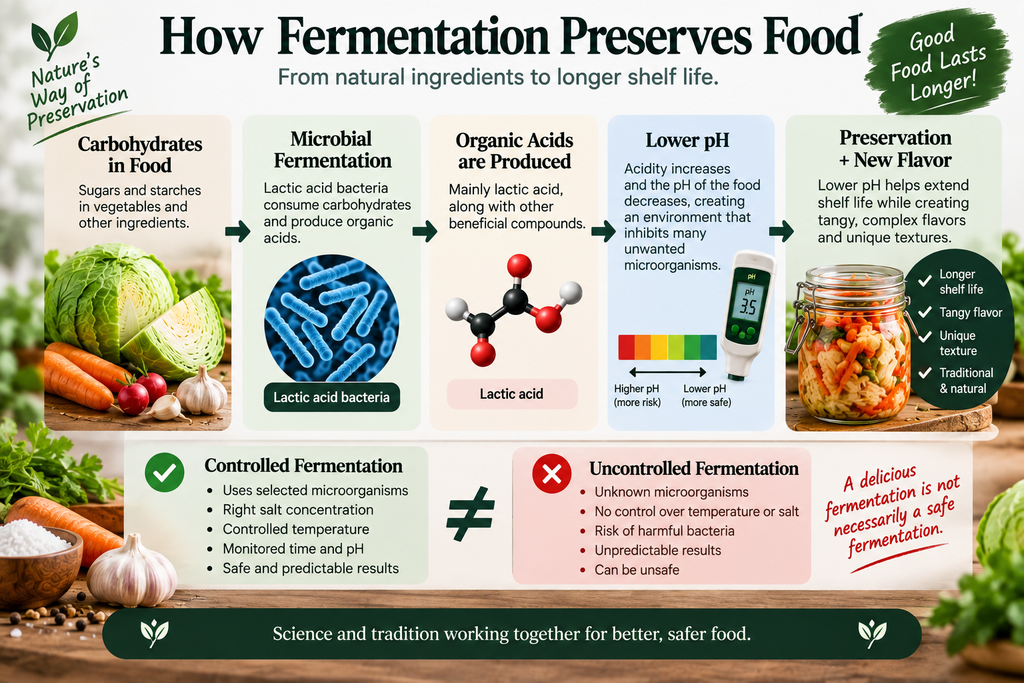
During certain types of fermentation, microorganisms consume carbohydrates and produce acids. As acidity increases, the pH of the food decreases, creating an environment that can inhibit many unwanted microorganisms. Lactic acid fermentation is a classic example used for vegetables and other foods.
But fermentation should not be confused with simply leaving food to sit.
Controlled fermentation is a food-processing method.
The microorganisms, salt concentration, temperature, oxygen availability, time and acidity all influence what happens during the process. For fermented vegetables, for example, food-safety guidance recommends monitoring acidity and using tested fermentation methods rather than relying on appearance or taste alone.
This is also why fermentation can be both a culinary technique and a food-preservation technique.
Acid changes the environment
As certain bacteria produce lactic acid, the food becomes more acidic.
That change can:
- Develop sour and tangy flavors
- Change texture
- Influence which microorganisms can grow
- Help extend storage life under appropriate conditions
However, lower acidity does not automatically make every fermented food safe.
Different fermentation methods behave differently. Some fermented foods are low-acid, and safety depends on the specific food and process. The National Center for Home Food Preservation emphasizes that acidity, ingredients and processing conditions must be controlled rather than guessed.
This distinction is especially important for anyone developing fermented products commercially.
A delicious fermentation is not necessarily a safe fermentation.
Food safety has to be designed into the process from the beginning.
For chefs, that means understanding not only flavor development, but also pH, temperature, sanitation, salt concentration, oxygen and storage conditions.
That is where fermentation moves beyond traditional cooking and becomes food science.
Why Does Temperature Matter So Much in Fermentation?
Temperature is one of the most important factors controlling fermentation.
Microorganisms do not work at the same speed under every condition. Temperature affects their growth, metabolism and the compounds they produce. This means the same food can develop noticeably different flavors depending on how warm or cool the fermentation environment is.
At a suitable temperature, the desired microorganisms can grow and produce the acids, gases, alcohols and aroma compounds that give fermented food its character.
If the temperature changes significantly, the balance can change as well.
Fermentation may become slower, faster or dominated by different microorganisms. That can affect acidity, aroma, texture and the overall quality of the finished food.
This is particularly important in foods such as yogurt, fermented vegetables, sourdough and cheese, where microbial activity needs to be controlled rather than left entirely to chance.
For a chef or food producer, temperature is therefore not simply a storage condition.
It is a flavor control.
A small change in temperature can influence how quickly fermentation develops and which characteristics become noticeable. This is one reason professional fermentation processes carefully define temperature ranges instead of relying only on time.
The important lesson is simple:
Time tells you how long fermentation has been happening. Temperature helps determine what happens during that time.
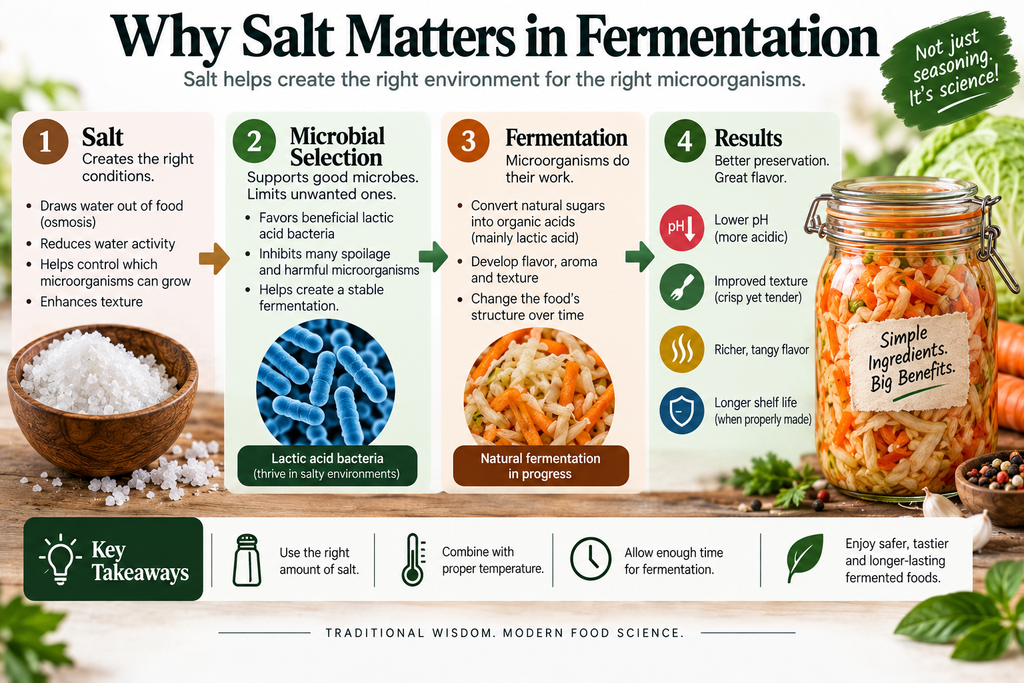
Why Does Salt Matter in Fermentation?
Salt does much more than add seasoning to fermented food.
In many vegetable fermentations, salt helps create an environment where desirable microorganisms can develop while making conditions less favorable for many unwanted microorganisms. It also influences how water moves from the food and affects the texture of the final product.
As fermentation progresses, salt, temperature, acidity and the available nutrients work together to shape the microbial environment.
Salt can therefore influence several things at the same time:
- Microbial activity
- Fermentation speed
- Acidity development
- Texture
- Flavor
- Shelf life
This is why changing the amount of salt in a fermentation process can produce a noticeably different result.
Too little control can allow undesirable microorganisms to compete with the microorganisms needed for the intended fermentation. Too much salt can slow the desired fermentation and create an overly salty product.
For chefs, this is an important reminder that fermentation is not simply about waiting for food to change.
It is about creating the right environment for the right microorganisms to do their work.
The salt level, temperature, time and ingredients all become part of the recipe.
And once you understand that, fermentation starts to look less like an old-fashioned preservation trick and more like a carefully controlled form of food science.
What Can Go Wrong During Fermentation?
Fermentation is a controlled biological process, but control is what makes the difference.
When the intended microorganisms do not dominate, other microorganisms can grow and produce unexpected changes in smell, appearance, texture or acidity. The result may be poor quality or, depending on the food and process, a food safety concern.
This is why successful fermentation depends on more than simply adding salt or leaving food at room temperature.
Several factors work together:
- Clean ingredients and equipment
- Appropriate salt concentration
- Suitable temperature
- Sufficient fermentation time
- The right microorganisms
- Control of acidity and other process conditions
- Proper storage after fermentation
An unusual smell or appearance should not automatically be interpreted as a sign that fermentation is working. Fermented foods can have strong aromas, but desirable fermentation should follow a controlled process with expected characteristics.
This becomes especially important when making fermented foods at home or developing products commercially.
For food businesses, fermentation should be treated as a process specification, not simply a recipe.
The ingredients, microbial culture, temperature, time, acidity and storage conditions should all be considered together.
That is where traditional fermentation knowledge meets modern food safety.
A good fermentation process creates predictable food. A poorly controlled process creates uncertainty.
What Does Fermentation Teach Us About Flavor?
From a chef’s perspective, fermentation is fascinating because it gives us another way to build flavor.
Instead of adding another spice, sauce or seasoning at the end, fermentation changes the ingredient itself.
A cabbage can become tangy and aromatic.
Milk can develop acidity and a completely different texture.
Flour can develop deeper aroma and complexity.
Soybeans can develop savory characteristics through microbial activity.
The chef’s role is to understand what is happening and then use that transformation intentionally.
Before working with a fermented ingredient, I look at several questions:
- What microorganisms are responsible?
- What compounds are being produced?
- How does acidity change?
- How will the texture develop?
- Which aromas will become stronger?
- How will the fermented ingredient behave during cooking?
This way of thinking can lead to more thoughtful menu development.
A fermented ingredient does not have to dominate a dish. Sometimes a small amount can provide acidity, umami, aroma or complexity that would otherwise require several different ingredients.
That is one of the reasons fermentation remains so valuable in modern cooking.
It is not simply about preserving an ingredient. It is about transforming its culinary potential.
Why Does Fermentation Still Matter in Modern Food?
Fermentation may be ancient, but the science behind it is highly relevant to modern food.
Today, fermentation is being explored not only for traditional foods, but also for new ingredients, sauces, beverages, plant based foods, bakery products and food manufacturing.
The reason is simple.
Fermentation can change an ingredient in ways that are difficult to achieve through ordinary cooking alone.
It can create acidity, aroma, umami, carbonation, softness, chewiness and other characteristics while also changing how an ingredient behaves during further processing.
For food developers, this opens an interesting area of innovation.
A familiar ingredient can become a completely different product through controlled microbial activity.
For example, fermentation can help transform:
Milk → Yogurt or Cheese
Cabbage → Fermented Vegetables
Flour → Sourdough
Soybeans → Miso or Tempeh
Fruit and Grains → Fermented Beverages
The important part is that modern food science does not replace traditional fermentation knowledge.
It helps explain why traditional methods work and gives chefs and food manufacturers better tools to control consistency, quality and safety.
This combination of tradition and science is what makes fermentation so valuable.
We are not simply rediscovering an old technique.
We are understanding it more deeply and finding new ways to use it.
Final Thoughts
Fermentation is one of the clearest examples of how food can change without simply being cooked.
Microorganisms transform the ingredients around them, creating new acids, aromas, flavors and textures. Temperature, salt, time, ingredients and other conditions determine how that transformation develops.
That is why fermentation can turn familiar ingredients into foods that taste completely different from where they started.
For chefs, fermentation offers another way to build flavor.
For food scientists, it provides a fascinating example of controlled microbial activity.
For food businesses, it creates opportunities for new products, improved processing and unique flavor profiles.
But the most important lesson is that fermentation needs understanding and control.
Good fermentation is not just about waiting. It is about creating the right conditions for the right microorganisms to do the right work.
Perhaps that is why this ancient technique continues to have a place in modern kitchens and food innovation.
The ingredients may be simple.
The science is anything but simple.
And that is what makes fermentation so interesting.